

Saturday, January 18, 2020

Sunday, August 26, 2018
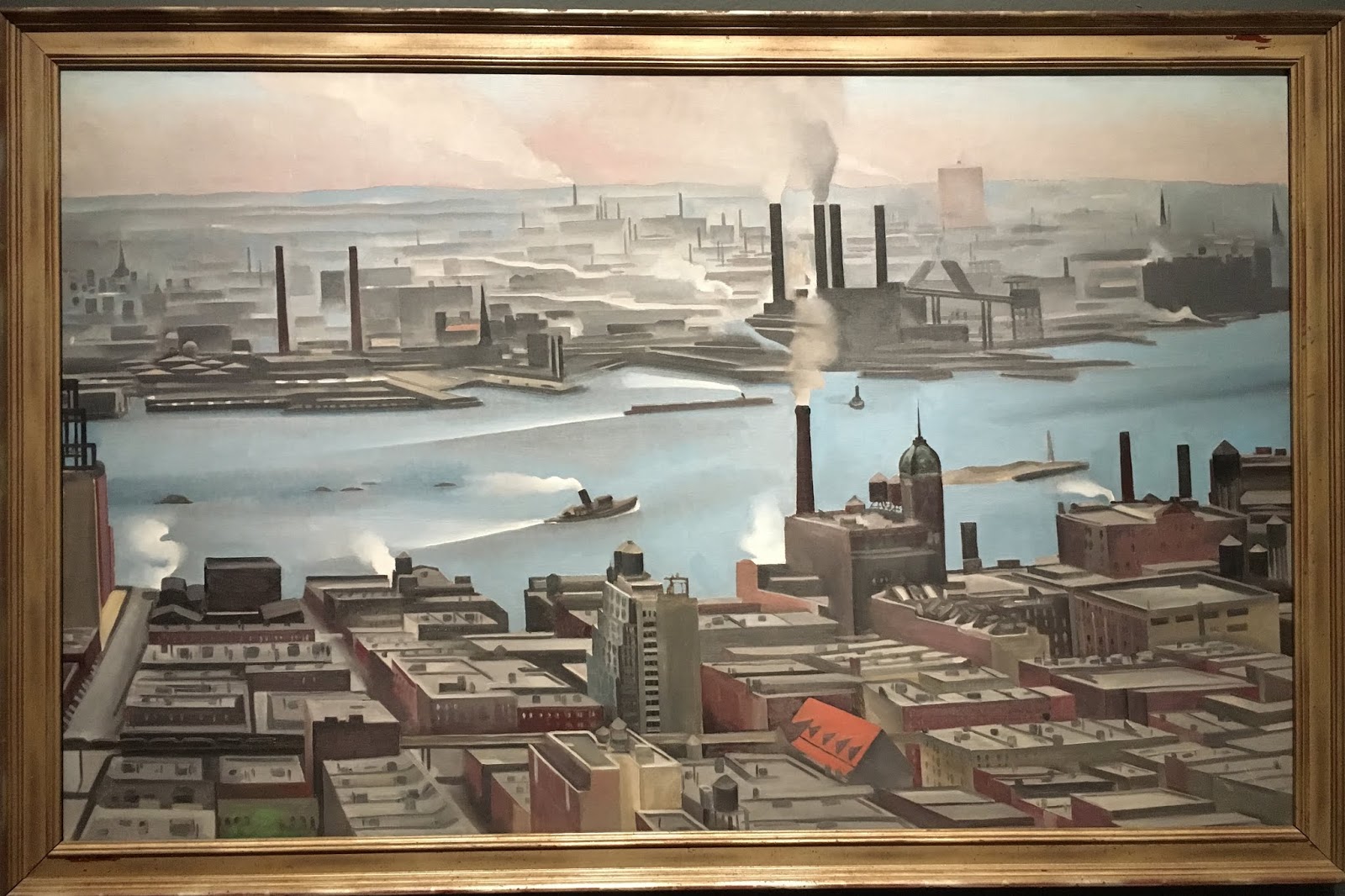

Romantic reverence for wild nature paradoxically disserved the natural world, idealizing nature to the point of obscuring much of its reality. When Romantic environmentalism did not own up to the ways that law and technology produce both the nature we encounter and the ways we encounter it, its ideal of pristine, wild nature grew narrower. This narrowing encouraged the Romantic habit of disregarding, even disdaining, places that do not meet high standards of sublimity and inspiration, segregating the natural world into a few cathedrals and vast tracts of profane land, with most of human life relegated to the profane regions.
--Jedediah Purdy
--Jedediah Purdy
Monday, March 12, 2018
Saturday, March 10, 2018


Tuesday, July 18, 2017




Friday, June 24, 2016
One of the things I find fascinating about California is that our
state of 39 million people with its $2 trillion economy subsists largely
on the bounty of five or six winter storms a year.
--Taryn Ravazzini
--Taryn Ravazzini
Thursday, June 23, 2016

I like invoking the native rhythm an image
suggests, and then not allowing the viewer to have it. I want people to
question the motivation behind shot lengths. Playing with temporal
expectations is what is most indigenous to cinema. And maybe indigenous
to other kinds of thinking, I don’t know. Where you’re forcing someone
to stay longer or shorter with something than they expect. That’s what I
love most about cinema – manipulating the temporal plane.
--Deborah Stratman
--Deborah Stratman
Wednesday, June 22, 2016
Sunday, May 22, 2016


There is a familiar
rhetorical trap that occurs around the subject of political art. Artists who's
work is too imaginative, reckless, wild, and beautifully useless are accused of
being complicit within the structure of the status quo. Their own imagination
ends up at war with the demands of their social conscience. On the flipside,
artists whose work is straightforward and political are generally accused of being
too didactic and lacking critical complexity. Their critic's arguments tend to
quickly show themselves as protectors of the art world and capitalist status
quo. In the end, it appears to be a lose/lose situation and as such, it has
turned off many an artist to the demands of being political.
What is to be done? Anything
looked at in and of itself will eventually resolve itself in failure. One
object/practice/person/idea can not encompass all the elements which comprise a
socially conscious revolutionary movement. Quite clearly, the modernist
conception of art as a separate aspect from daily life fails miserably and
contemporary art has yet to take this lesson to heart. In isolation all things
stand alone and are mute. It is through the rich diverse fabric of collective
action that private expression gains meaning.


Friday, January 29, 2016
What I realized, partly because I didn’t go to art school, but also by
engaging in a lot of different audiences and communities, is that people
within the arts tend to have an extremely inflated sense of their own
importance in the world, and that most people don’t give a shit about
“Art.”
--Josh MacPhee
--Josh MacPhee
Thursday, January 28, 2016
Saturday, October 10, 2015
Sunday, September 27, 2015

The relationship between the didactic and the arts has suffered immensely, and the gulf continues to grow: the socially engaged artist that wades into the waters of the didactic faces the wrath of an arts community that privileges rigidified codes of ambiguous aesthetics above all else.
--Nato Thompson
--Nato Thompson
Thursday, July 23, 2015


Monday, May 25, 2015

Sunday, January 18, 2015
Finally, art is--or should be--generous. But when working with place, artists can only give if they are receiving as well. The greatest challenges for artists lured by the local are to balance between making the information accessible and making it visually provocative as well; to fulfill themselves as well as their collaborators; to innovate not just for innovation's sake, not just for style's sake, nor to enhance their reputation or ego, but to bring a new degree of coherence and beauty to the lure of the local.
--Lucy Lippard
--Lucy Lippard


Monday, June 09, 2014
“I
am suggesting that, for too many individuals in modern society, there
is a feeling of being dominated, and that feelings of powerlessness are
almost inescapable. I
am also suggesting that such feelings can to a large degree be overcome
through conscious endeavor on the part of individuals to keep
themselves awake, to think about their condition in the world, to
inquire into the forces that appear to dominate them, to interpret the
experiences they are having day by day. Only as they learn to make sense
of what is happening, can they feel themselves to be autonomous. Only
then can they develop the sense of agency required for living a moral
life.”
--Maxine Greene

Sunday, March 02, 2014
Saturday, February 15, 2014
Thus the project of imparting visibility to the very classes and
peoples, the very spaces and sites, where history has remained nameless
and without image and for whom cultural representation would in fact
lead to an initiating constitution of historical identity could be one
of the remaining functions of radical cultural practices, rather than an
affirmation of past values and privileges now resurrected to reassert
the vanishing basis of cultural legitimation defining Western societies.
--Benjamin Buchloh
--Benjamin Buchloh


Saturday, November 16, 2013
One of my favorite things about art/artists in the world today is that beyond any kind of label of "activist", a wide range of image makers and cultural producers are stepping up as artistic public intellectuals and taking a very active role in public discourse about complex themes that cannot be resolved by straight forward politics, science, social science or journalism. They are eschewing the marginality where most artists seem willing to wallow.
--Daniel Tucker
Saturday, October 12, 2013

Friday, September 27, 2013


Saturday, June 29, 2013
Sunday, June 23, 2013


Subscribe to:
Posts (Atom)